
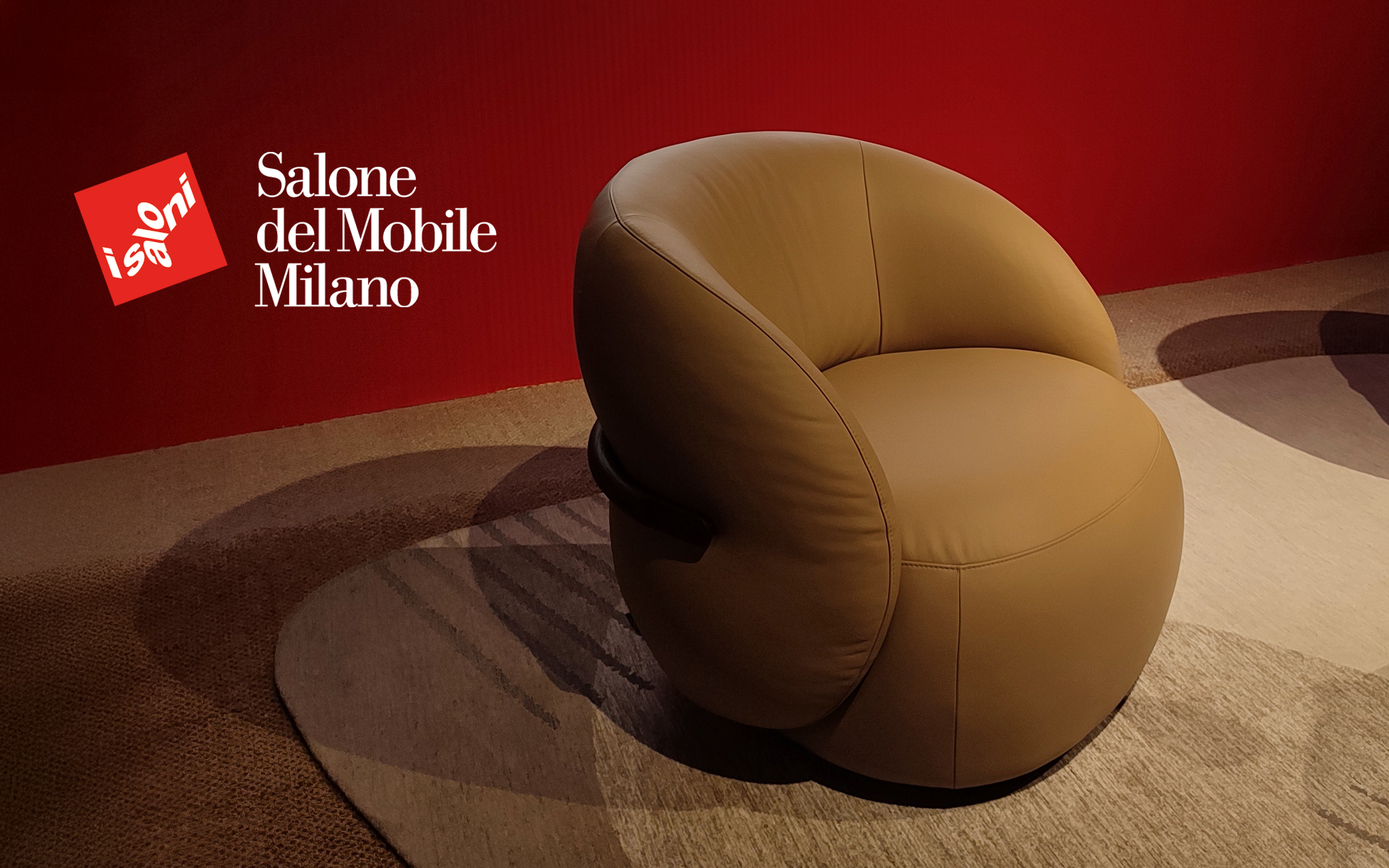
Every year, Milan It becomes an unavoidable meeting point for those who follow design and the way it influences the space where we live. During the Milan Design Week, the city takes on its own intensity, with offerings that spread across showrooms, installations, and exhibition spaces.
At the centre of this dynamic is the Salone del Mobile, which continues to be the most significant moment for the sector of furniture and interior design. This is where brands and creators present new collections, but also where a common direction becomes visible: the way domestic space is being rethought in response to new ways of living. More than a product showcase, the Salone serves as a portrait of the current moment in interior design. The 2026 edition revealed a more sensory aproach to interior design, where the house ceases to be considered solely for its aesthetics and begins to be built from experience, do comfort and the way it is lively in everyday life.
The importance of material in interior design
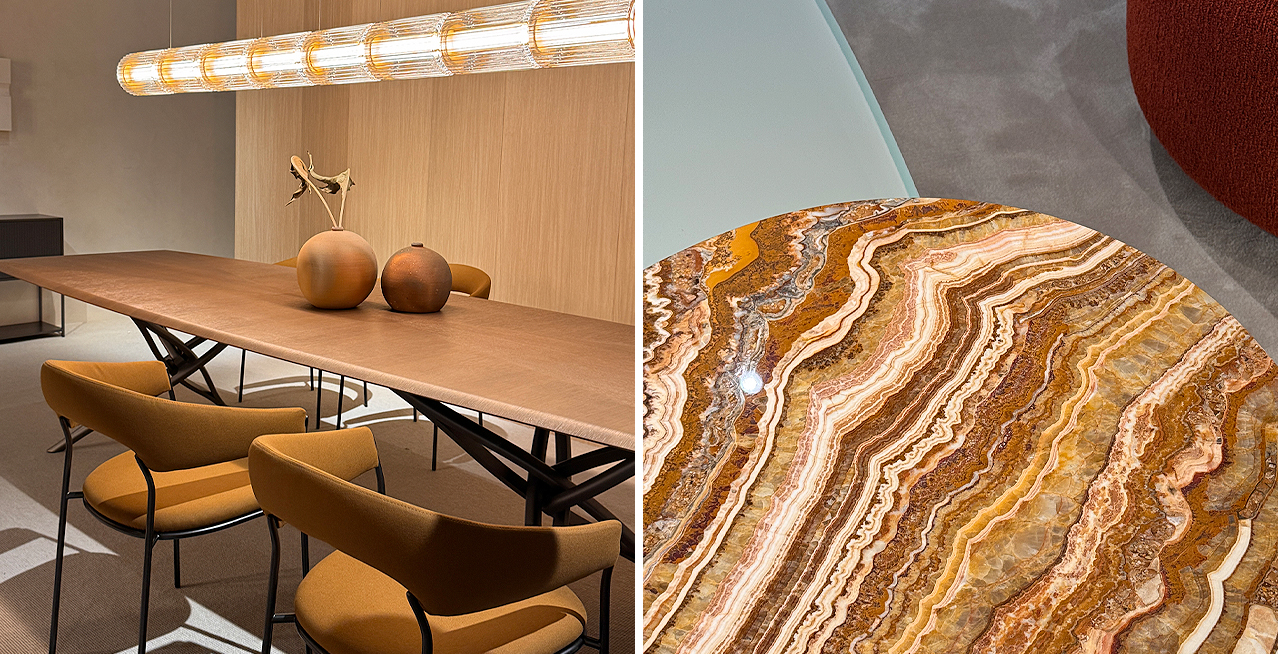
One of the most evident trends at Salone del Mobile 2026 was the material appreciation. The natural materials gained prominence, not as a decorative element, but as the foundation for constructing spaces. Wood with rougher finishes, stone with marked veins and ceramics with a more handcrafted character emerged consistently throughout the fair. These choices reinforce a more direct connection to the essential, creating more environments authentic e less artificial.
Within this approach, the heart ceases to be applied independently and begins to arise from the matter itself. They emerge hot springs e earthy close to clay, mud and terracotta, which do not impose themselves but result directly from the surfaces and their finishes. These are colours that do not interrupt the reading of the space, but rather extend it, reinforcing the sense of continuity between materials, light and environment. At the same time, a strong attention to the process and the origin of the materials. It's not just about the final appearance, but about how each surface is crafted, its texture, and how it responds to light and use.
Organic forms and lower volumes
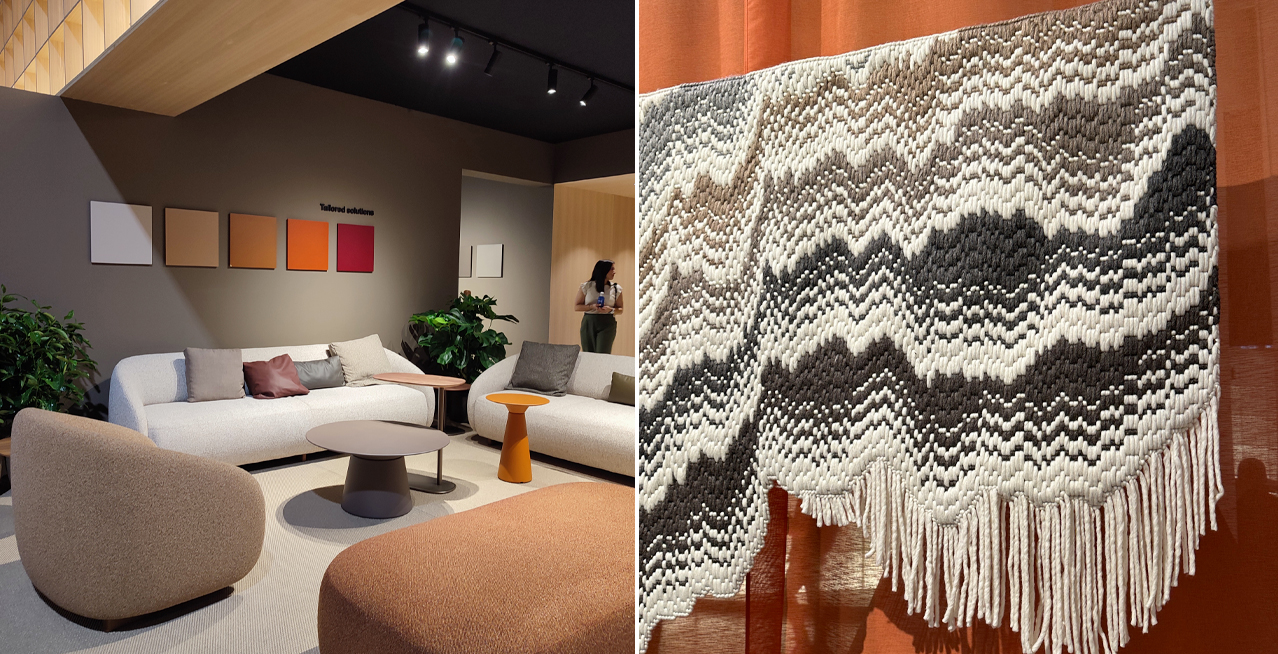
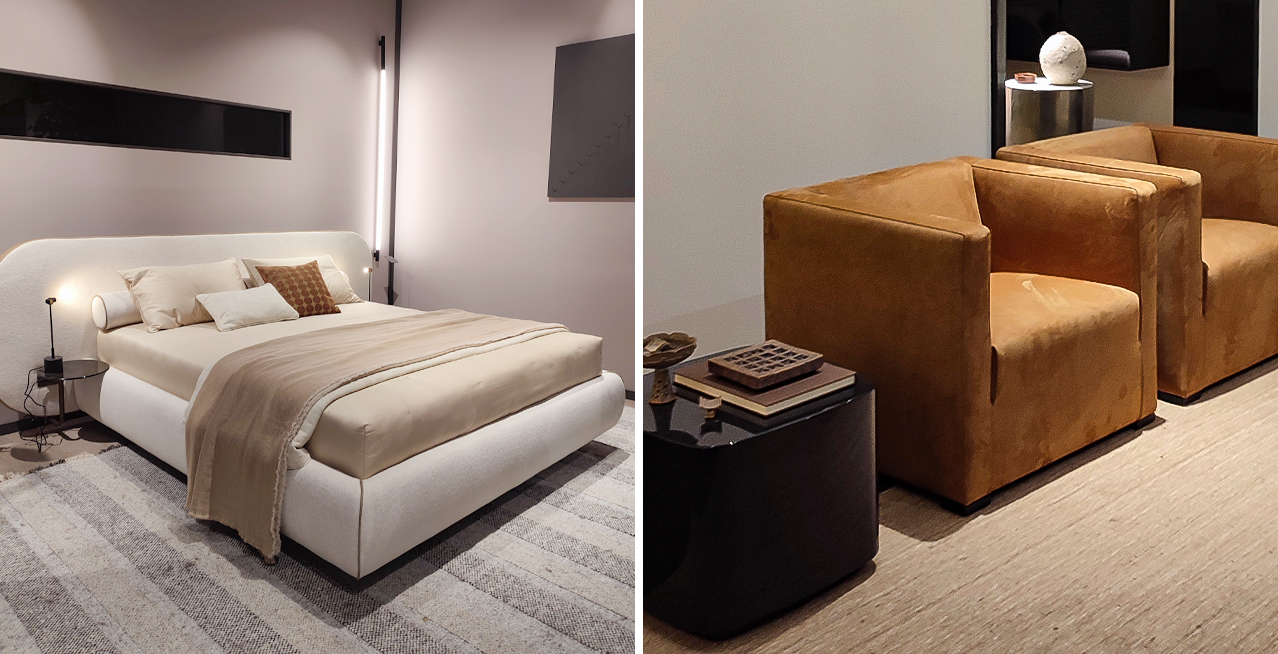
Salone del Mobile 2026 reinforced a trend that had already been gaining momentum: the softening of lines and the emphasis on lower volumes. Sofas with more continuous profiles, tables with rounded edges, and pieces that appear to be crafted from a single gesture frequently appear. Geometric rigidity gives way to a more fluid interpretation of the object. This evolution is not merely aesthetic. It is linked to how spaces are used today. More informal environments call for less rigid pieces, more open to adaptation and movement. Lower volumes contribute to this sense of closeness. They create less hierarchical, more horizontal spaces where the relationship between pieces and user becomes more direct and less distant.
Light as an essential element in the environment
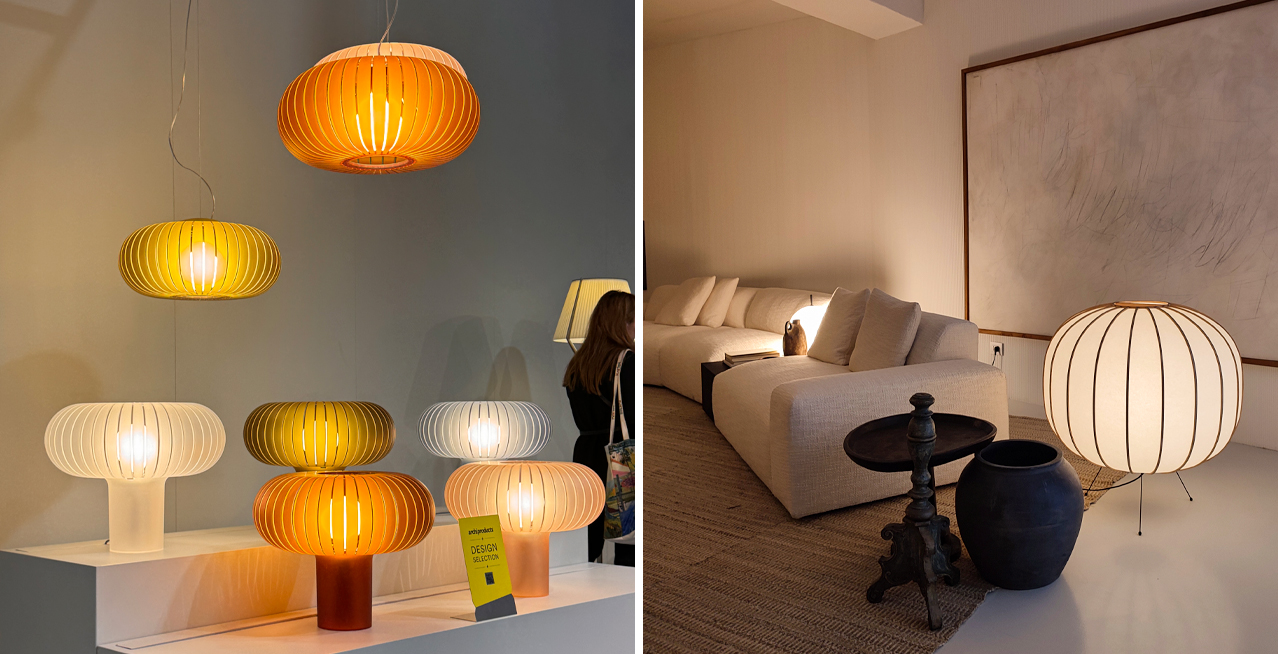
Lighting has ceased to be treated as an afterthought and has become a more active part of the space's design. At the Salone, light emerges as an element that define atmospheres, guides routes e directly influences the reading of the materialsInstead of intense and uniform solutions, more systems prevail soft e controlled often integrated into the furniture itself or the architecture of the space.
A warm light e indirect remark It gains relevance by creating subtler transitions between zones and enhancing the sense of continuity. The aim is not just to see better, but to feel the space better. This approach ensures that the lighting works in harmony with the materials and shapes, creating more balanced environments that are less reliant on isolated focal points.
More flexible spaces adapted to everyday life
Another cross-cutting theme at Salone del Mobile 2026 is the flexibility two spaces. The furniture ceases to be understood as a fixed element and becomes part of more integrated systems versatile, capable of responding to different uses throughout the day. Modular sofas, extendable tables and storage solutions allow you to reorganise the space without compromising its visual coherence.
This approach directly reflects how homes are used today. The same space can serve as a work area, social zone, or relaxation space, often without clear physical separations. Technology appears discreetly, integrated into materials and structures, without visually imposing itself. The aim is not to attract attention, but to simplify the use of the space.
A quieter reading of the design
What emerges from this edition is not merely a set of isolated trends, but a common direction in the the way interior design is being conceived. Instead of abrupt movements or radical changes, the Salone del Mobile 2026 presented a more continuous evolution making it clear that interior design is evolving towards a more approach sensory, but flexible and more focused on the experience. The home becomes a more fluid space, where natural materials, well-crafted light and organic shapes combine to create more balanced environments and close to those who inhabit them.